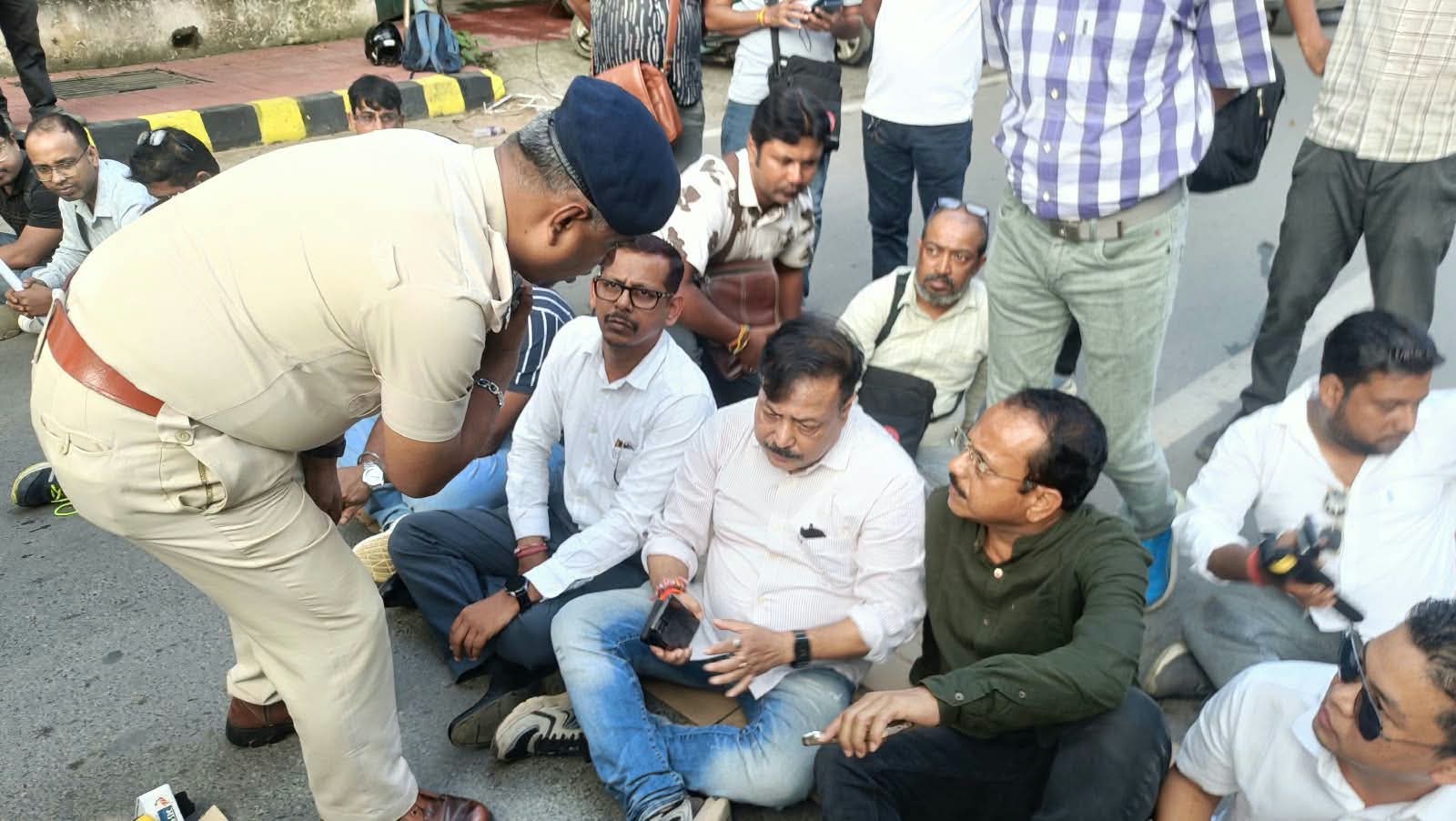



: Ten months on from the ousting of authoritarian Prime Minister Sheikh Hasina via a popular uprising in Bangladesh, hopes for a new era of political and press freedom in the country remain stymied by familiar challenges. As many as 140 journalists, many labelled as being aligned with the Hasina regime, have faced charges, including accusations of protest-related killings.
Among them are Shakil Ahmed, former head of news at Ekattor TV, and his wife, Farzana Rupa, the station’s former chief correspondent – both remain in detention. While much of the protest-related violence during the uprising was linked to law enforcement and Awami League cadres, journalists still remain under fire and concerned for their safety in the evolving political space.
Journalist Mohammed Omar Farok said, “while we no longer receive calls from intelligence agencies to stop reporting, journalists and media houses are now imposing self-censorship out of fear. The threat of being labelled a ‘fascist collaborator’ or facing mob attacks has…crippl[ed] journalism.” Between January and April 2025, rights group Ain o Salish Kendra recorded 120 cases of journalist harassment.
Besides ongoing legal cases and online and offline harassment, the Bangladesh Financial Intelligence Unit also ordered banks to freeze the accounts of 28 journalists, while the Ministry of Information revoked the press accreditation of 167 journalists. Bangladesh’s media landscape has also shifted dramatically since the political shift, with a changing of the guard in several major outlets. In total, 29 leadership roles at newspapers, TV channels, and digital platforms have been replaced.